The Sea-View Seat Is Not Always the Best View
Choose the best seat at a seaside sports venue by comparing sightline, distance and distractions, so the match stays clear while you enjoy the coast.
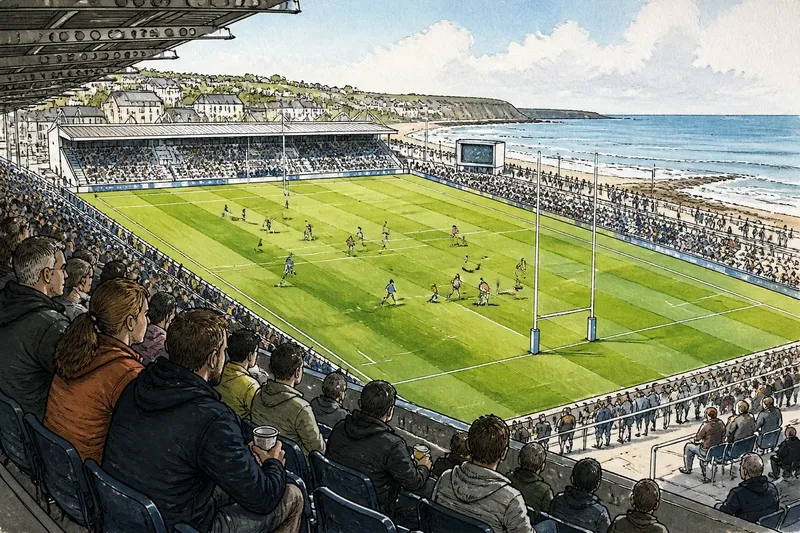
The most common seating mistake at a seaside ground is choosing the seat with the broadest water view and assuming it will also show the match clearly. For the best seat at a seaside sports venue, judge the playing-area sightline first; a scenic position can leave play distant, blocked by a rail or competing with people on a promenade.
Start with the part of the game you want to follow
There is no single best view for every spectator. Someone watching the whole field needs a different angle from someone focused on one player, one end or the social atmosphere. Decide what you most want to see before comparing seats.
For a game spread across a large area, a raised position near the centre of a long side often makes the shape of play easier to read. You can see movement from end to end without turning constantly. For a contest concentrated around a goal, crease or court end, a seat nearer that area may make individual actions clearer, though the far end can be harder to judge.
If you are new to the sport, prioritise a view that shows how play develops rather than one close to a single corner. A little distance can help you see players in relation to one another. If you follow the game closely, you may prefer a seat nearer the encounters you care about.
Choose the sightline before the sea view
A sightline is the unobstructed view between your seat and the part of the playing area you want to watch. On the seating map, look for barriers, support posts, advertising boards, dugouts and covered sections that could interrupt it. A seat labelled central may still place a post across the action.
Consider what stands between you and the field when you are seated. A tall crowd in front may matter more than a small change in distance. A terrace rail can also cut across the lower part of the view. If the map does not show these details, ask the ticket office about restricted views or consult the venue’s seating information.
Check the angle as well as possible obstructions. Looking down the length of a field can make near and far players overlap. A position facing more across the playing area may separate them and make runs easier to follow. For sports that move between ends, a balanced side view is often more useful than a seat directly behind one end.
Match distance to the action you enjoy
Closer seats make expressions, individual contests and small technical details easier to notice. They can also narrow your view of the game. If the action moves quickly from side to side, you may spend more time turning your head than reading the pattern of play.
From farther back, the field can look more complete. That helps when you want to understand team shape or follow play across a broad area. Individual moments may be less distinct, particularly at a large venue. Choose a distance that lets you recognise the action you care about without straining to keep up.
For a family group, an open view and enough room to settle can matter more than the closest row. Children may find a whole-field view easier to follow than a tight angle on one end. If someone in your group needs a particular access arrangement, check the venue’s accessible-seating information rather than assuming a scenic or central seat will meet that need.
Allow for distractions around the ground
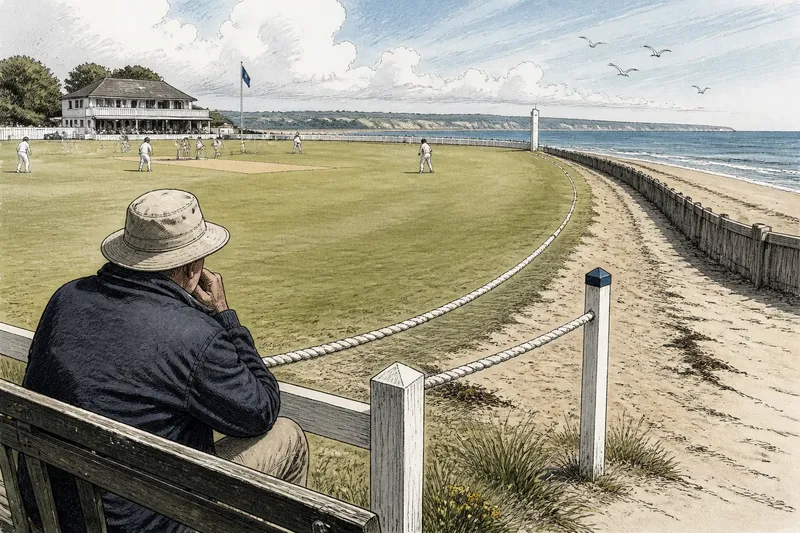
A clear view of the field can still be hard to use if your attention keeps being pulled elsewhere. At a seaside ground, that might mean a busy promenade, a path behind the seating, a bright horizon or people crossing between spectators and the field. The sea is not the problem; the question is whether the position makes it difficult to keep your eyes on play.
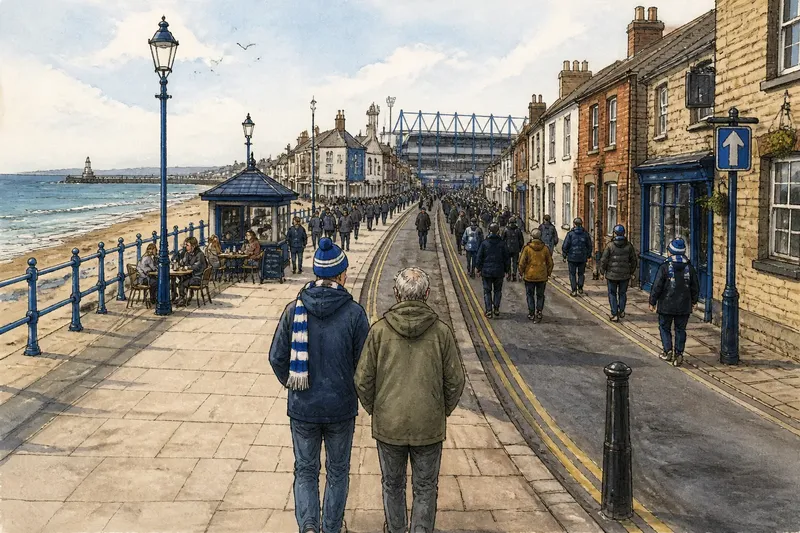
Notice whether you will be looking past moving people or activity outside the ground. A seat near an entrance may bring a steady flow of spectators into your peripheral vision. An opening towards the beach can offer a striking outlook, but glancing towards it after every stoppage may make it harder to pick up the next phase.
Sound matters too. A lively stand can bring you closer to the occasion, while a quieter position may make it easier to hear calls from the field. Choose according to whether you want involvement, concentration or a balance of both.
Use your priorities to narrow the seat choice
Compare the seating plan with what you want from the match. Each check below links an observable feature to a decision, with an alternative if that feature does not suit you.
- Whole-field view: Check whether the seat is raised and near the middle of a long side. If you can see both ends without a barrier crossing the field, choose it for following tactics; otherwise, compare another side-on section.
- Action at one end: Check whether the target area is visible at an angle rather than hidden directly behind a goal structure. If the angle shows that area and some of the wider field, choose it; otherwise, move to a section with a clearer diagonal view.
- Children or mixed-age companions: Check whether the main playing area is open from seated height. If everyone can see without looking between people, choose that section; otherwise, favour a less obstructed row over the lowest or most scenic one.
- Atmosphere: Check whether the active stand offers a clear field view as well as crowd energy. If it does, choose it for a lively matchday; otherwise, select a quieter section and take in the atmosphere elsewhere around the ground.
- Individual detail: Check whether a closer seat still shows the far side of play. If it does, choose the closer position for technical detail; otherwise, sit farther back for a fuller view.
- Coastal outlook: Check whether you can glance from the field to the sea without a walkway or barrier dominating the view. If both remain visible, choose that seat for a combined match-and-coast experience; otherwise, prioritise the field and enjoy the water before the match or during a break.
Say you are choosing between a central upper seat and a lower seat facing the water. Your invented starting point is that you want to follow a game across the full field, and the lower seat looks towards a busy walkway. First, compare the seating map for the angle across the field; it shows the upper seat facing both ends. Next, check the venue’s view information for the walkway; it indicates that people pass across the lower seat’s outlook. The decision is the upper seat: it favours the match, while the trade-off is a less prominent sea view. You can still look towards the water before play or during a break.
Check the view before you book
Start with the venue’s seating plan, but treat it as a guide rather than a picture of what your eyes will see. Check which side faces the sea, where covered areas and pillars sit, and whether the plan marks restricted-view seats. If the venue provides photographs from individual sections, compare the angle on the field rather than choosing by the visible coastline alone.
If you can visit before buying, look from the section you are considering. Notice whether the nearest barrier cuts across the field, how much of each end is visible and whether people walking nearby enter your line of sight. If a visit is not practical, ask the ticket office: “Can I see the full playing area from this section while seated?” That is more useful than asking whether the view is good.
For a first visit, do not pay extra solely for an advertised sea view until you understand how the ground is arranged. A seat with a direct view may suit the match better than a premium position facing the coast. On a return visit, you can decide whether the scenic angle is worth that compromise.
What should you check before choosing a seaside seat?
Is a seat behind the goal a good choice?
It can suit spectators who want to watch action build towards that end. If you want to follow play across the whole field, a side-on seat usually gives a more balanced view of both ends.
Are higher seats always better for seeing the game?
Height can make the layout of play easier to read, but it does not fix every poor angle or obstruction. Compare the whole field from the section rather than choosing a row simply because it is higher.
Should you choose a covered seat or an open one?
Choose according to the venue’s layout and what you need from the view. A cover may provide shelter, while an open position may offer a clearer outlook; check that either option leaves the playing area unobstructed.
Can you rely on a photograph of the view?
Use photographs to compare broad angles, not to judge every detail. A camera may show the field from a different height or miss the people, rails and posts that affect your seat.
Keep the sea in view without losing the match
For the best seat at a seaside sports venue, start with the game, not the postcard view. Choose the position that shows the action you care about, then weigh its distance, angle and distractions against the coastal outlook. That order makes the choice clearer: a sea view is a welcome addition when you can still follow play without working to find it.
On matchday, use breaks in play to look towards the water rather than expecting one seat to deliver every view at once. A clear sightline lets you follow the game; a pause gives you time to enjoy the coast.