A Windy Matchday, Planned Around What You Already Own
Plan a windy matchday with familiar layers, secure pockets and a lighter bag, so you can stay comfortable and keep essentials together beside the sea.
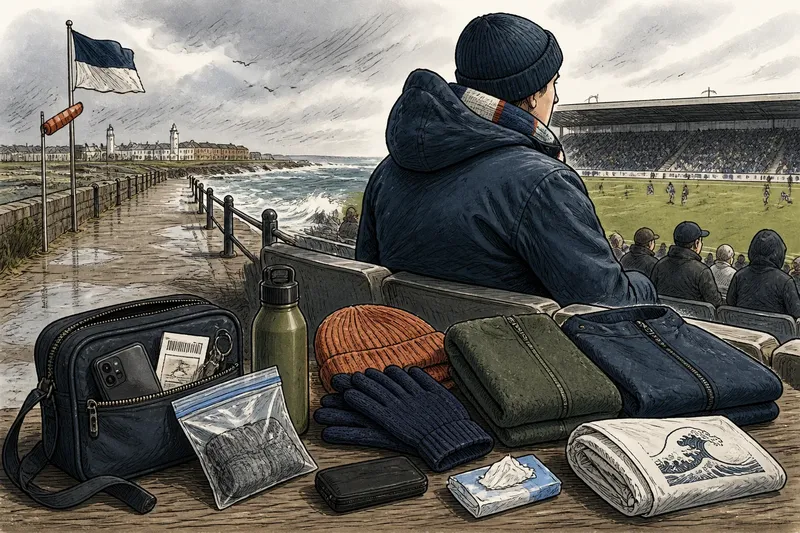
The common windy matchday mistake is dressing for the forecast alone and leaving belongings loose; the cost is a chilly wait and a distracting search under the seat. A windy matchday is easier to manage when you choose familiar layers and give every small item a secure place. Start with the walk, the stand and the journey home in mind.
Check the whole outing before choosing clothes
Look beyond the temperature on your weather app. A coastal ground can feel different from a sheltered street nearby, especially when you are sitting still. Check the expected wind and rain, along with conditions on your route to and from the venue. If the forecast is uncertain, prepare for a change rather than carrying a separate outfit for every possibility.
Think through the day in order: travelling, waiting at the gate, watching the match and leaving. Walking can warm you up; a long spell in the stands can make the same clothes feel colder. A removable layer lets you adjust without wearing your thickest item from the start.
Use the forecast as a prompt, not a promise. If wind is likely to hit an exposed stand, choose an outer layer that closes properly. If showers are possible, pack a compact waterproof item you already own instead of relying on a hood that will not stay in place.
Build a familiar layer combination
Choose clothes you know are comfortable together. A long-sleeved top, jumper or fleece, and wind-resistant outer layer make a flexible starting point. Specialist kit is not essential for an ordinary matchday; choose pieces you can add or remove without changing the rest of your outfit.
Check the details before you leave. A high collar, a zip that reaches the neck and cuffs that sit close to the wrist can help keep draughts out. Tuck a scarf securely so it will not flap into your face. Put gloves in a zipped pocket or bag before you arrive, rather than carrying them loose.
Say you plan to walk to a seaside ground in a light shirt and own a fleece, a rain jacket and a woolly hat. Wear the shirt and fleece, carry the jacket in a small bag, and keep the hat in an inside pocket until you reach exposed seating. You can then adjust your clothing as the conditions change without buying anything or carrying spare clothes.
Choose footwear for the route and the ground
Wear shoes that are comfortable for the approach and suit the conditions. A breezy day can still bring damp paving, sandy paths or puddles near entrances. Familiar trainers or walking shoes with a secure fit may be more practical than new footwear you have not worn in.
Before setting off, secure your laces and check that the soles are clear of old mud. If rain is likely, consider whether your usual shoes cope with wet ground. A spare pair of socks in a sealed bag may be useful; keep it inside your main bag so it does not become another loose item.
Dress for the route as well as the seat. You may queue, walk along a waterfront or cross an uneven access path. Shoes that feel fine on a short indoor journey can become uncomfortable on a longer walk.
Give personal items one secure place
Wind turns small items into awkward problems. Keep your ticket, phone, keys and tissues in a zipped cross-body bag, small rucksack or closing coat pocket. Choose what you already use comfortably, and avoid carrying loose objects while finding your seat.
- Check whether your ticket and travel details fit in one zipped pocket; if they do, keep them there, and if they do not, use a separate closed pouch.
- Check that your keys are on a ring or in a closed compartment; if they are loose, secure them before leaving, or move them to a zipped pocket.
- Check that your phone fits in a secure, reachable pocket; if it does, use it, and if it does not, put it in a zipped bag compartment.
- Check whether tissues and lip balm fit in a small pouch; if they do, keep them together, and if not, carry only the item you expect to need.
- Check that a removed hat, gloves or layer fits inside your bag; if it does, stow it there, and if it does not, wear it or leave it at home.
- Check that the bag closes easily with everything packed; if it does, use it, and if it does not, remove a non-essential item or choose a roomier bag.
Choose one pocket for each essential and keep to that arrangement. A familiar pattern makes it easier to notice when an item is put back in the wrong place. Check the venue’s bag rules before setting out; its instructions take precedence over what is convenient on the promenade.
Pack comfort items without adding clutter
Take only the extras that address a likely annoyance. A reusable water bottle, compact snack or small pack of tissues may earn its place, depending on the matchday and venue. A bulky collection of “just in case” items can make the walk between the transport stop and ground less comfortable.
Protect items that could be damaged by damp in a waterproof pouch or clean resealable bag. This might include paper tickets, a power bank or spare socks. A carrier bag from home can hold a wet outer layer on the return journey; fold it into the bottom of your bag.
Plan where your layers go at the seat
Decide what to do with a layer you remove. Keep it on your lap, tuck it into a closed bag or wear it around your waist only if it stays secure and does not restrict movement. Do not leave a hat, scarf or gloves on an open seat where a gust could carry them away.
If you bring a small cushion or folded blanket, choose one you can fasten or pack away. A loose blanket can be difficult to control in a breeze and may get damp. Keep your bag close enough to reach, but out of walkways and other spectators’ space.
Before standing up, check the seat, the space beneath it and the pocket where you keep your ticket. This quick pause helps catch anything left behind.
Which windy matchday choices make the biggest difference?
What should you wear to a windy coastal match?
Wear familiar layers you can adjust: a comfortable base layer, jumper or fleece, and wind-resistant outer layer. Add a hat or gloves if you expect to sit exposed, and choose footwear suited to the route as well as the stand.
How do you stop a hat or scarf blowing away?
Put a hat in a closed pocket or bag whenever you take it off. Tuck a scarf securely into your coat, and do not place either item on an empty seat.
What belongs in a windy matchday bag?
Take your ticket, keys and phone, plus a small number of useful comfort items. Give each a secure pocket or pouch, and leave out anything you are unlikely to use.
What should you do if the weather changes?
Keep one packable outer layer somewhere you can reach without unpacking everything. Check the forecast before leaving, but choose clothing that can also cope with a shift in wind or showers.
A windy matchday plan does not need new kit: decide what you will wear, what you will carry and where each loose item belongs. Before leaving, close the bag you intend to take and check that every essential has a secure place. That leaves you less to manage when the wind picks up and the match is under way.