Promenade Route or Back Streets to a Coastal Match?
Choose a promenade route or back streets for a coastal match with a simple way to balance sea views, crowd flow, access and a reliable arrival.
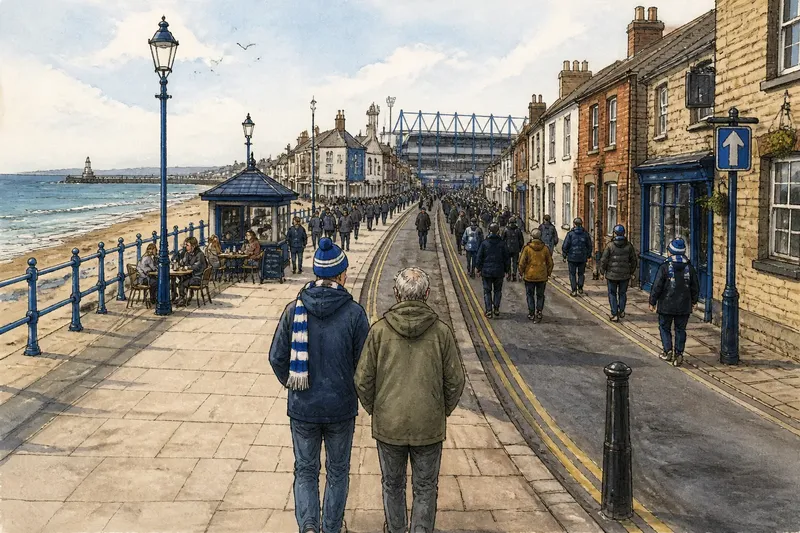
The common mistake with a coastal matchday route is choosing the promenade for the view without checking how it meets the venue entrance. A promenade route or back streets can feel like two different arrivals, but a blocked access point or a slow-moving crowd can cost you time and leave little room to change course.
What is the difference between a promenade route and back streets?
A promenade route follows the seafront, often along a broad public walkway beside the beach, harbour or sea wall. It makes the journey part of the occasion: you can watch the water, pass cafés and meet other supporters in a visible stream moving towards the ground.
Back streets take you inland through the blocks behind the waterfront. They may pass shops, pubs, residential roads or the venue’s less prominent entrances. The feel is more local and enclosed, with corners and crossings breaking up the walk rather than a long, open vista.
Neither route is automatically quicker or easier. A seafront path may be direct on a map but narrow at a kiosk or busy crossing. Streets may offer several turns and entrances, yet give you options if one stretch is crowded. Compare the actual route to the gate you need, not just the distance between the station and the venue.
Which route suits the mood you want before the match?
Choose the promenade if you want the arrival to feel like a shared coastal outing. It can suit a relaxed visit, a first trip to the ground or a group that wants to stay together along a clear landmark. The sea also makes it easier to orient yourself: keep the water on the same side and watch for the venue’s approach roads.
Choose the back streets if you prefer a quieter, more everyday arrival or want to stop at a particular café or shop. They can also make the venue feel woven into its neighbourhood rather than set apart beside the shore. Check that your preferred route does not turn into a confusing series of crossings when supporters begin arriving.
Think about the group, not only your own preference. A child, an older companion or someone who walks more comfortably on level, open paths may value a broad promenade. Someone carrying a bag may prefer streets with shelter or places to pause. The useful question is which route makes the whole group feel at ease, not which looks more memorable in a photo.
How should you choose between the two routes?
Use a simple route check before leaving. Open the venue map and a street map, then trace both options from your arrival point to the correct entrance. Look for the parts that could change the experience: steps, narrow passages, busy road crossings, pedestrian barriers and places where the routes converge.
- Check the gate. Identify the entrance printed on your ticket or venue information. A route that reaches the wrong side of the ground may add an avoidable detour.
- Check access. Look for step-free links and crossings that suit everyone in your party. If access details are unclear, contact the venue before setting out.
- Check crowd flow. Look for signs, road closures or event guidance that affect the seafront and nearby streets.
- Check the stopping points. Note a café, shop or open space where your group can pause without blocking the path.
- Check the fallback. Find a street that connects the promenade to the venue area, so you can switch routes if the waterfront becomes congested.
Say you are arriving by train with a friend who walks slowly, and the ground’s gate is behind the seafront buildings. You spot a promenade crossing that narrows near a café, while a parallel street leads to the same gate and has a clear crossing. You could take the street on the way in, then use the promenade after the match if the crowd has thinned and your friend is comfortable with it.
What should you check on the day?
Confirm the venue’s matchday information before you leave. Temporary entry arrangements, road restrictions and pedestrian routes can change; follow the organiser’s directions where they differ from a general map. If you are using a phone, save the venue pin and entrance details in advance, since signal or battery can become inconvenient in a crowded place.
At the station or car park, pause before joining the largest stream of supporters. Look for official signs and compare them with the gate you need. A crowd heading towards the seafront may be walking to a different stand, a nearby pub or a public beach access point.
Keep your fallback practical. If a promenade section feels too packed, move to a marked connecting street rather than squeezing past people at the water’s edge. If the streets are busier than expected, follow the signed main approach instead of cutting through unfamiliar lanes. Stay with your group and agree on a visible meeting place if someone gets separated.
When is the promenade route the better choice?
The promenade is a good fit when it is open, clearly connected to your entrance and comfortable for the people walking with you. It offers an unmistakable sense of place and can make a short walk feel like part of the day, not merely a transfer from transport to turnstile.
It may be less suitable when the seafront has pinch points, temporary barriers or a crowd moving in both directions. A waterfront route can also leave fewer obvious alternatives if it runs beside a wall or beach edge. Check for a joining street before committing, especially if you are arriving close to kick-off.
When do back streets make more sense?
Back streets are useful when they connect directly to your entrance, offer a calmer walk or give you places to stop. They can also help you avoid a busy waterfront stretch. A familiar landmark, such as a named high street or public square, can make the route easier to remember than a string of small turns.
They are not always the quieter option. Local roads may funnel supporters towards a narrow junction, and residential streets can have limited pavements. Use signed public approaches, keep driveways clear and avoid assuming that a shortcut through a car park or private passage is open to visitors.
Which route is best for a coastal match?
The best promenade route or back streets choice is the one that reaches your own entrance comfortably and leaves you a sensible alternative. For a scenic, unhurried arrival, favour the waterfront when its access is clear; for a direct or more sheltered walk, choose a suitable street route. Check both before you go, then decide again at the point where they meet.
That small pause can make the arrival feel less rushed. You do not have to choose one route for the whole day: take the option that fits the crowd and your group on the way in, then enjoy the other on the way back if conditions allow.